
An #Unplugged reflection on losing your way — and the new variable I didn’t see coming.
I’ve been writing about unplugging since 2014. I’ve stood on stages around the world teaching veterinary professionals to watch for the warning signs — the irritability, the anxiousness, the nights you can’t sleep, the inbox that makes your stomach drop. I’ve talked about this with friends, more times than I can count, that there is never a good time to unplug, so you have to rip the bandaid off anyway.
And somewhere over the last year, I stopped listening to my own advice… again.
The good kind of chaos
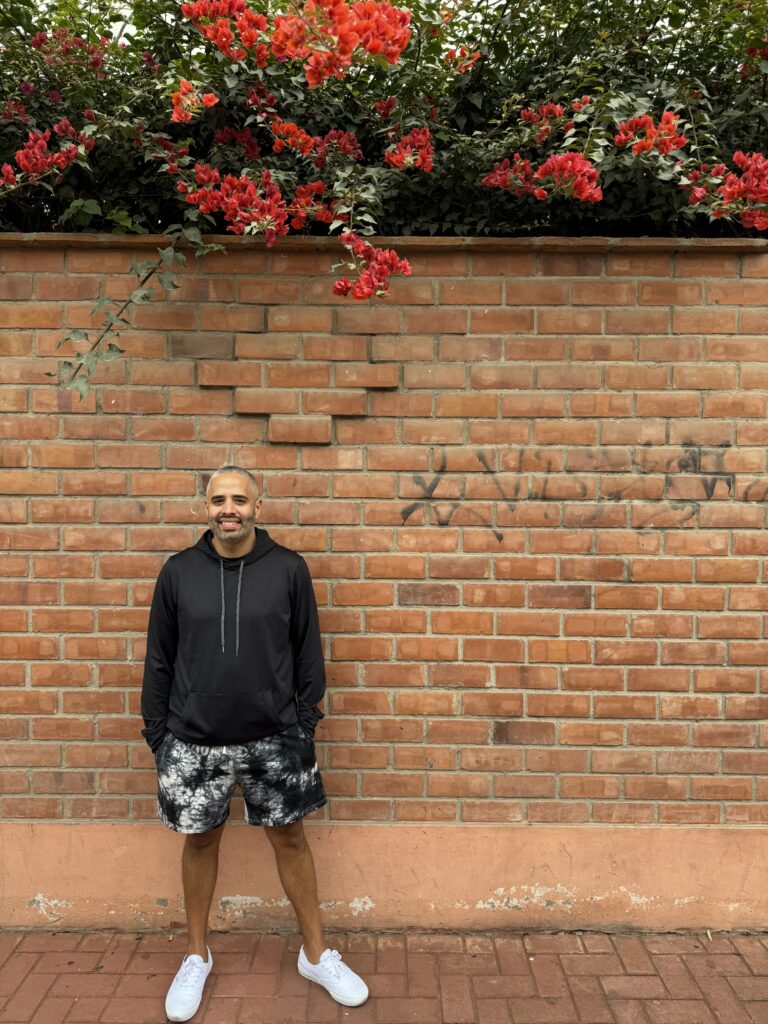
Last January, we rebranded as Tapir, and it’s been wonderful. We’ve grown substantially. We’ve brought on incredible partners and clients I genuinely love working with. In addition, I’m well past 100,000 miles flying with United this year, and it’s only June. I’m about to leave for an event in Thailand, then a couple weeks later, Manila, Busan, Turkey, the UK, and a long run of stateside travel.
Lately, the days blur together. Wake up, answer a couple of emails. Get to the airport lounge, run client consults. Board the plane, do more email. Land, work, try to sneak in a quick run if I can — and even that has become hard to come by. Then off to speak at an evening event. Then do it again tomorrow.
I want to be clear: this is my own doing. I love what I do. Educating veterinary professionals is a huge part of what fills my cup. But a bigger company means a bigger workload, and the signs I spent a decade teaching other people to recognize are all rearing their heads in me again. The irritability. The anxiety. The trouble sleeping. Normally, I’m so disciplined that I unplug before any of this shows up. This past year, every single moment felt impossible to give away.
Here’s how I know it got bad. I answer every client email and return every client call promptly — that machine still runs. But everything else? I’ve let it rot. I dread opening my social media inbox. I ignore certain apps entirely. I’ve missed call after call from friends, and let simple text messages sit for weeks before replying. This is the worst it has ever been for me. And the irony is almost too much: the very technology that’s supposed to keep us connected — a text back, a quick reply — is the thing I now find too daunting to face. That’s not connection. That’s technology running my life instead of the other way around. You know… the very thing I talk about not letting happen to you & me.
The pandemic was the last time I slipped this badly. I didn’t unplug at all that year until the last week of the year. But strangely, even though 2020 was chaotic, it felt manageable in a way this doesn’t at times. Which made me stop and ask a question I hadn’t asked before.
The variable I didn’t see coming
What actually changed? For the most part, this is a rhythm and routine I’m used to.
The honest answer, I believe, is AI. I didn’t realize that was the root of the problem until I started thinking about what had changed over the last two years — and then dug into the research. I can do more now than I have ever been able to do. I write emails faster. I build tools and apps to serve our clients quicker. I take in more volumes of content. I take on more than I ever would have dreamed of taking on a few years ago. And in small conversations with people I meet, I’ve started voicing a worry: if AI lets us do more, are we just becoming more susceptible to digital fatigue and overload?
I hadn’t taken the time to see what the research actually says. So before I wrote this, I finally did. What I found stopped me cold, because it echoed some of my own feelings, and I guess I didn’t expect it — and the findings weren’t something I see many people talking about right now.
A study published in JAMA Network Open in early 2026 surveyed more than 20,000 U.S. adults and found that greater levels of generative AI use were associated with higher levels of depressive symptoms — the odds of at least moderate depression were 30% greater among people who used AI daily. The researchers found the same pattern for anxiety and, of all things, irritability — the exact word I use in my talks. The effect was even more pronounced for people aged 45 to 65, where daily users had 50% greater odds of at least moderate depression.¹ (To be fair to the science, the researchers are careful to say this is an association, not proof that AI causes depression — it’s possible people already struggling reach for these tools more. But the signal is hard to wave away. And look — I’m not depressed. But I am definitely feeling negative associations with tech lately, more so than normal, and I’m starting to see and feel that AI is part of a problem I didn’t see coming.)
If you’re wondering why — what it is about AI that pulls people in this direction — the honest answer is that this particular study didn’t crack that open. It measured the link, not the cause; the authors flatly say the next job is to figure out the mechanism and whether it’s even causal at all. But they did surface one clue that I can’t stop thinking about: the symptoms were highest among people using AI for personal use, and among the 25-to-44 crowd. Not the spreadsheet-and-email crowd using it strictly for work — the people who’d folded it into their lives. The harm, if there is one, doesn’t seem to come from the tool sitting on your desk. It comes from how deep you let it reach into everything else. And other researchers studying what they call “technostress” point at the texture of that reach: the constant low hum of more to process, the loss of control, the cognitive load of always having another thing the machine just made possible. They’ve found AI acts as a productivity enhancer and an anxiety amplifier at the same time.²
Then there’s the paradox at the heart of my whole year. The pitch for AI was always liberation: automate the boring stuff, free up the human for the meaningful stuff, go home earlier, go for that run. The data tells a different story. A UC Berkeley team spent eight months inside a tech company watching what happened when people genuinely embraced AI on their own, with no pressure. Across every department, the same thing happened: AI expanded what people felt capable of, and so their to-do lists simply grew to fill every hour AI was supposed to save. Work bled into lunches and late evenings. One engineer put it almost exactly how I’d put it: you thought you’d work less, but you don’t — you just work the same or more.³ A separate longitudinal study found that 67% of workers who adopted AI tools in 2025 reported working more hours by the end of the year, not fewer.⁴
There’s a strange second edge to all of this. Some people say AI makes them smarter because of everything they’re constantly learning, and honestly, sometimes I feel that too. But lately I more often just feel flattened by how much information I now have access to — like the firehose I aimed at my own face in the name of getting ahead is the same firehose wearing me down.
So here’s the conclusion I’ve reluctantly come to. I’m not busier this year because we re-branded, I’m weak or undisciplined, or because I simply don’t know how to say no or manage my own workload. I’m busier because AI made me capable of being busier, and somewhere along the way — quietly, without ever deciding it out loud — I said yes to all of it. Take on more. Connect more. Do more. I love AI. And it is exhausting. That shouldn’t be true, for every reason I just listed, and yet here we are.
What I’m actually unplugging from this time
For me, a real disconnect has never been a day or a weekend. I believe in small breaks — they recharge you, they buy you energy — but sometimes small isn’t enough. A true reset means leaving it all behind for at least a week, usually more. That’s when the benefits of unplugging actually show up.
But this year, “all of it” means something new. This year I’m not just turning off my phone and logging out of social media. I’m leaving the AI tools behind too. And I’ll be honest about my own intensity here — I’m revolting against tech so hard right now that on a recent trip I bought a physical book. A real one. I always travel with a Kindle loaded with titles, and I’ve never considered that cheating; it’s not connected to the internet, it’s just easier than hauling ten books through an airport. But this time I didn’t even want the Kindle. I wanted paper. I wanted something with no screen, no battery, no notification it could ever surface.
Because if I’m being truthful, I think these AI tools may be more addicting than social media ever was for me — or at least every bit as addicting as social media was at its worst. And I’ve long since let go of social media; AI is the thing that crept in to take its place. That’s a hard thing for one of its loudest advocates to admit. But the whole point of this practice, the message I come back and give every single year, is that you have to stay in control of the technology. I lost that control. Over the next couple of weeks, unplugged, I intend to get it back — and to think hard about how I let AI streamline my work right up until it started running it.
Three things I’m taking with me
I’ve shared a lot of tips over the years — schedule the time, alert your contacts, set the auto-responder, hide your apps. Those still hold. But this year taught me some new ones, born specifically from the AI trap I walked into. Here are three I haven’t offered before.
1. Audit what you said yes to, not just what’s on your screen. Every other year, unplugging meant removing the device. This year, I realized the device was never the only real problem — the problem was the steady pile of commitments I accepted because AI made each one feel almost weightless to take on. So before you leave, do a “yes audit.” Look at your obligations and ask of each one: did I take this on because it mattered, or because a tool made it feel effortless to take on? You can’t fix an overload problem by deleting an app if you keep saying yes to the work the app made possible. The boundary isn’t only on the phone. It’s on your calendar.
2. Match every efficiency you gain to a specific hour you keep. The promise of AI was time back — to run, to call a friend, to close the laptop early. The trap is that the saved time silently refills with more work. So make the trade explicit and non-negotiable. If a tool genuinely gives you back two hours, assign those two hours to something human before the work can claim them — block the run, protect the dinner, schedule the call you’ve been weeks late returning. An efficiency that isn’t deliberately spent on your life will always be spent on more output. Decide where it goes before it disappears.
3. Keep one analog ritual that technology is never allowed to touch. Buying that physical book taught me something. The value wasn’t the book — it was having one corner of my life that no screen, no app, and no AI could reach into. Pick a ritual and make it permanently offline: a paper book at night, a notebook you draft ideas in by hand, a morning walk where the phone simply does not come. Not for a sabbatical week — for good. It becomes a fixed point you can feel your way back to whenever you’ve drifted, a reminder in your own hands that you’re still the one deciding. When the rest of your life is humming with tools that can do more, you need at least one thing that quietly does less.
I teach this stuff in many of my lectures, write about it often, encourage friends and strangers anytime I can — a longtime advocate since 2014… and I still lost the thread. If that’s reassuring to you in some way, good — let it be. The signs come back for all of us, even the ones who try to lead change on this subject. The work isn’t to never drift. The work is to notice you’ve drifted, and to have the courage to rip the bandaid off, because there is never a good time and there never will be.
Eric D. Garcia 💚
Sources referenced
- Perlis RH, Gunning FM, Uslu AA, et al. “Generative AI Use and Depressive Symptoms Among US Adults.” JAMA Network Open. 2026;9(1):e2554820. (Daily AI use associated with ~30% greater odds of at least moderate depression; ~50% greater for ages 45–65; similar patterns for anxiety and irritability; symptoms highest among personal users and ages 25–44.)
- “Mental health in the ‘era’ of artificial intelligence: technostress and the perceived impact on anxiety and depressive disorders.” Frontiers in Psychology, 2025 — AI tools as simultaneous productivity enhancers and anxiety amplifiers.
- UC Berkeley / Harvard Business Review, 2026 — eight-month observational study finding AI-expanded capacity caused to-do lists to grow to fill saved time; work bled into evenings.
- Longitudinal workforce study, 2025 — 67% of workers who adopted AI tools reported working more hours by year’s end.